

How to Choose Infant School Shoes That Last
The first pair of infant school shoes has a big job to do. They need to look right for the uniform, feel comfortable through a full day of learning and play, and cope with wet playgrounds, climbing frames and the walk home. For a child who may be new to wearing school shoes every weekday, comfort is not an extra - it is where a good school day starts.
The best choice is rarely the shiniest pair or the cheapest pair on the shelf. It is the pair that fits properly, suits your child’s routine and has enough strength in the places that take the most wear. Here is what to look for before the first bell rings.
Start with fit, not the size on the box
Children’s feet grow quickly, particularly in the early school years, so it is tempting to buy bigger and hope the shoes last longer. Too much growing room, however, can make a shoe harder to walk in. Feet can slide forwards, heels can rub and a child may start tripping as they run around at break time.
Have both feet measured where possible. It is common for one foot to be slightly longer or wider than the other, so fit the shoes to the larger foot. Your child should be able to stand naturally with their weight through both feet while the fit is checked. There should be a little room for growth at the front, but the heel should stay secure rather than lifting with every step.
Ask your child to walk, turn and squat in the shoes before deciding. A shoe can feel fine while they are sitting down but rub at the heel or press across the toes once they start moving. If they are able to explain how they feel, listen carefully. If they are not, watch for toe curling, awkward steps or an attempt to pull the shoes off straight away.
A good fit should feel secure, not tight
A well-fitting infant shoe holds the foot gently around the heel and instep, with enough space at the toe and across the widest part of the foot. It should not leave deep red marks after a short try-on. Socks matter too: try school shoes with the thickness of sock or tights your child will actually wear, rather than with bare feet.
Do not rely on a shoe loosening dramatically with wear. Leather can soften and mould gently to the foot, but a shoe that pinches from day one is unlikely to become comfortable just because it has been worn in.
Choose infant school shoes for their real routine
Think about the journey the shoes will make each week. Some children walk to school and spend lunch racing around the playground. Others are dropped at the gate but have a busy day of indoor play, PE sessions and after-school club. The right style depends on those details.
For a child who is still learning independence, touch-tape fastenings are often a practical choice. They are quick for little hands to manage and allow a snug adjustment over the top of the foot. Slip-on styles can work well when the fit is secure, while buckle-fastened Mary Janes offer a classic uniform look for many schools. Lace-up shoes can give excellent adjustability, but they are usually better suited to children who can tie and untie them confidently, or who have an adult on hand to help.
Before buying, check the school’s uniform policy. Many schools ask for plain black shoes with minimal branding, while some allow brown or navy options. Trainers may be comfortable, but they are not always accepted as school footwear. Choosing a pair that meets the rules from the start prevents a frustrating last-minute change.
Materials that earn their place in the school bag
Leather remains a popular material for infant school shoes because it is supportive, breathable and able to soften with wear. A soft leather upper can be kind to young feet, while a properly structured heel and sole help the shoe hold its shape during busy days.
Patent finishes have their place too, especially where a smarter uniform look is wanted. They can be easy to wipe clean, although scuffs tend to show more clearly than on matte leather. If your child spends every break playing football or clambering over equipment, a more forgiving everyday finish may be the sensible option.
Look closely at the sole. It should be flexible enough to move with a child’s natural step, yet substantial enough to protect their feet from hard playground surfaces. A grippy tread is useful in the British weather, particularly on wet paths and school gates covered in fallen leaves. Very thin, smooth soles may look neat at first but can wear down quickly with daily use.
At Term Footwear, the focus is on school-ready designs that balance soft leather comfort with sturdy construction - because parents should not have to choose between a shoe that looks smart in September and one that still feels good after a busy term.
The small details that prevent daily battles
Morning routines are easier when shoes are simple to put on. Open the fastening fully and check that your child can get their foot in without forcing the heel down. A pull tab, wide opening or easy-to-grip touch-tape strap can make a surprising difference when everyone is trying to leave the house on time.
Inside the shoe, feel for rough seams, stiff edges and loose areas around the heel. These can become sore spots once shoes are worn for several hours. A padded collar around the ankle can add comfort, while a breathable lining helps feet feel fresher by the end of the day.
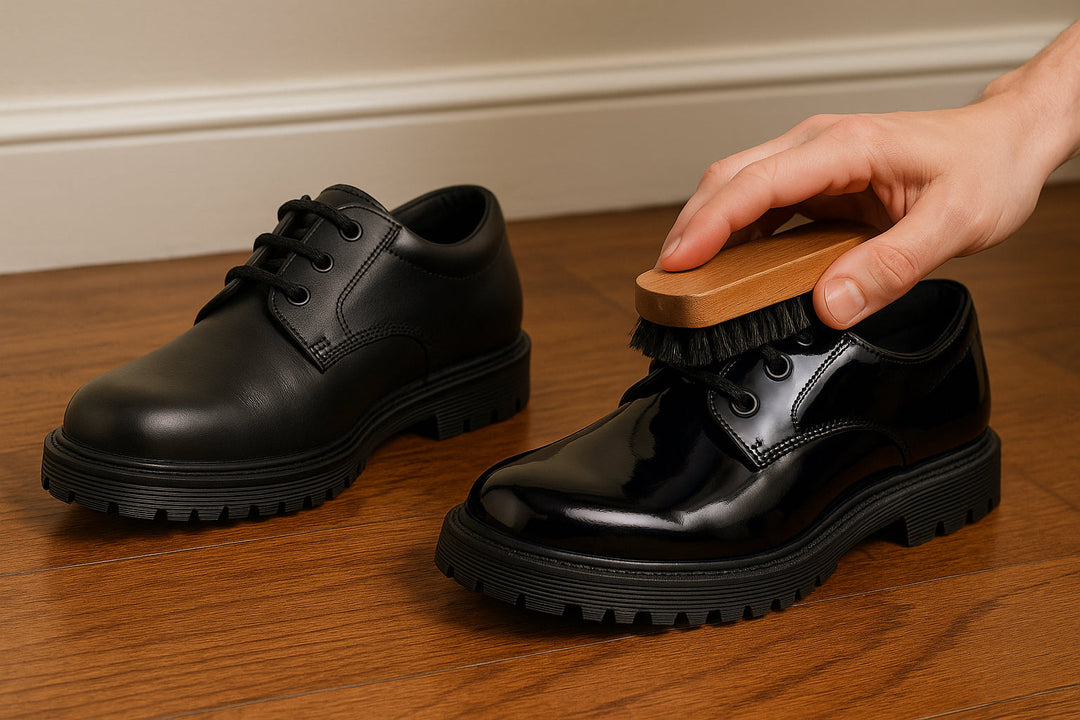
It is also worth considering how easy the shoes will be to clean. Black leather is a reliable school choice because it works with most uniforms and responds well to a quick wipe and regular polish. A little care takes only minutes but helps leather stay supple and keeps shoes looking presentable for assemblies, school photographs and parent evenings.
Give new school shoes a sensible start
Even comfortable shoes benefit from a short settling-in period. Let your child wear them around the house for brief spells with their school socks before the first full day. This gives them time to get used to the fastening and lets you spot any rubbing before the return journey from school makes it worse.
Check the shoes again after the first week. Look at the heels, toes and fastening straps, and ask whether any part feels uncomfortable. If there is rubbing, do not ignore it in the hope that it will disappear. Recheck the fit and make sure socks are not bunching at the toes or heel.
Keep school shoes for school where you can. Changing into trainers, plimsolls or wellies for muddy outdoor play protects the uppers and gives the school pair a chance to dry properly. On especially wet days, waterproof wellington boots are the better choice for the walk, then school shoes can be changed into at the gate or in the classroom if the school allows it.
Know when it is time to check the fit again
A pair can still look tidy while no longer fitting correctly. Check your child’s feet and shoes regularly through the school year, especially after a growth spurt or a holiday. Complaints of sore toes, new reluctance to put shoes on, worn patches at the toe, or heel rubbing all deserve a closer look.
Children do not always say that a shoe is too small. They may simply take longer to get ready, avoid running at playtime or ask to wear a different pair. A quick fit check can spare them weeks of discomfort.
A strong pair of school shoes should support all the ordinary moments that make up an infant’s day: lining up with friends, sitting on the carpet, running outside when the bell goes and walking proudly through the school gate. Choose for fit first, then fastening, durability and school rules, and you will give little feet one less thing to worry about.